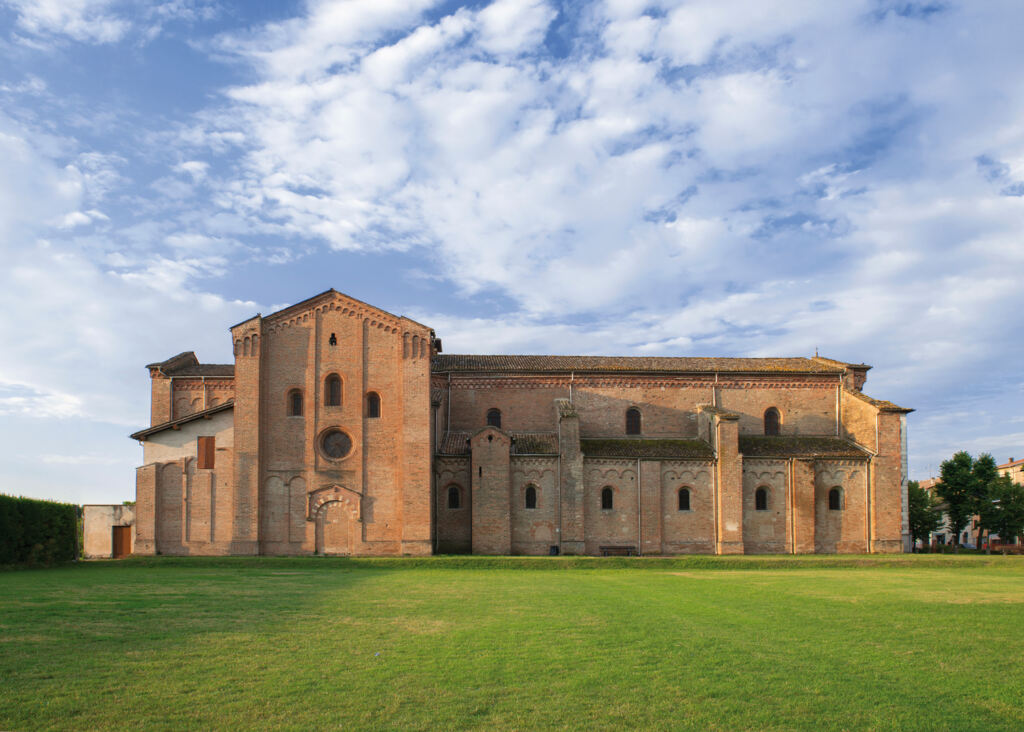
Exterior of Fontevivo Abbey
By Monica Massolin
The area surrounding Fontevivo is a typical landscape of the Parma plain, shaped over the centuries by water, agriculture, and the presence of monasteries, rural courts, and large estates. Enclosed between the Via Emilia to the south, the Autostrada del Sole to the north, and the Taro River to the east, this stretch of plain still maintains a unique balance of small historic centers, productive countryside, and significant artistic and architectural heritage.
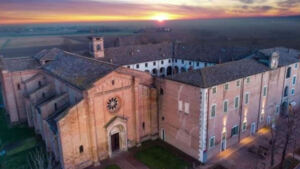
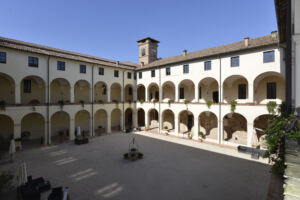
Fontevivo was founded and developed around the great Cistercian Abbey of San Bernardo, one of the most important medieval monastic complexes in the Parma area. Even today, the village retains the intimate and quiet layout typical of towns built around a monastery: porticoes, courtyards, historic buildings, and the large abbey square demonstrate the role this place played in the land reclamation and agricultural development of the plain.
A few kilometers from the Parmigiano Reggiano Museum is Fontanellato, a historic village dominated by the Rocca Sanvitale, a castle surrounded by water and famous for Parmigianino’s frescoes housed in the Room of Diana and Actaeon. The historic center still retains the character of a small Emilian walled town, with porticoes, squares, and religious architecture.
Also in the same area is the Labirinto della Masone, a cultural complex designed by Franco Maria Ricci and nestled in the countryside between Fontanellato and Fontevivo. The large bamboo labyrinth, along with its exhibition spaces and art collection, is now one of the most visited cultural sites in the province of Parma.
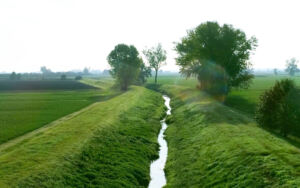
Traveling between Fontevivo, Fontanellato, Priorato, and the surrounding countryside, the landscape alternates between tree-lined streets, canals, farmyards, and dairies. It is an area where the presence of water—from springs to drainage canals—has contributed to the fertility of the plain over the centuries and the development of cattle farming, a key factor in the creation and spread of Parmigiano-Reggiano.
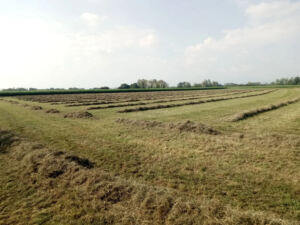
Even today, this stretch of plain retains a strong rural and productive identity: alongside the sites of history and art, the agricultural landscape that has made the Parma area famous worldwide survives, composed of stables, cultivated fields, rows of vines, and small settlements that still mark the slow pace of the Emilian countryside.